
Table of Contents
ToggleGHK-Cu Copper Peptide: Complete Guide to Copper Tripeptide-1 Science, Benefits, Molecular Structure & Applications
Introduction: Understanding GHK-Cu Copper Peptide
GHK-Cu Copper Peptide is one of the most studied copper-binding peptides in modern peptide science. Known scientifically as Copper Tripeptide-1, GHK-Cu has attracted significant attention because of its unique molecular structure and the relationship between peptides and copper ions.
Peptides are short chains of amino acids that play important roles in biological systems. Unlike large proteins, peptides are smaller molecules that scientists can study, modify, and analyze more easily.
The GHK-Cu peptide combines three amino acids:
- Glycine
- Histidine
- Lysine
with a copper ion to create a specialized peptide complex.
Scientists study GHK-Cu because it provides valuable insights into:
- Peptide chemistry
- Copper-binding molecules
- Molecular communication
- Biotechnology innovation
- Cosmetic science research
The growing interest in GHK-Cu Copper Peptide has made it an important topic in peptide research, molecular biology, and advanced ingredient science.
What Is GHK-Cu Copper Peptide?
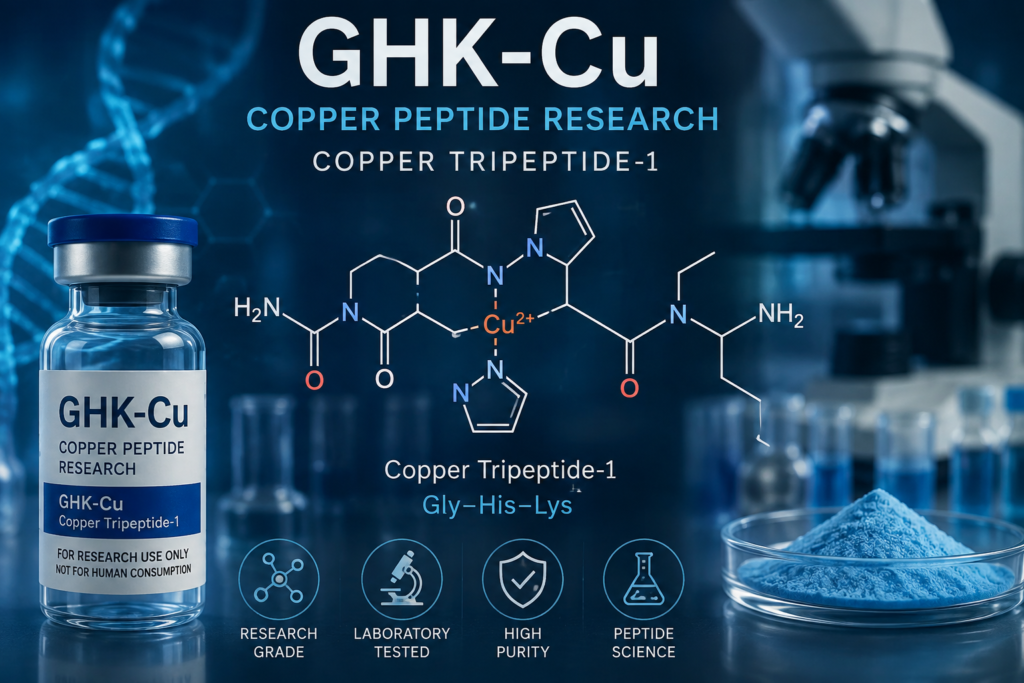
GHK-Cu Copper Peptide is a naturally occurring copper peptide complex made from the tripeptide GHK and copper ions.
The name GHK comes from its amino acid sequence:
G — Glycine
H — Histidine
K — Lysine
When this peptide binds with copper, it forms Copper Tripeptide-1, commonly referred to as GHK-Cu.
The unique feature of GHK-Cu is the interaction between the peptide structure and copper.
This creates a molecule that researchers can study to understand:
- How peptides interact with minerals
- How molecular structures influence activity
- How small biological molecules communicate within systems
The Discovery and History of GHK-Cu
The study of GHK-Cu Copper Peptide developed from early research into naturally occurring peptides and biological molecules.
Scientists discovered that short peptide sequences could influence biological environments and serve as important molecular messengers.
As peptide chemistry advanced, researchers gained the ability to:
- Identify peptide sequences
- Produce synthetic peptides
- Analyze molecular structures
- Study peptide interactions
This advancement helped establish copper peptides as an important area of scientific investigation.
Today, GHK-Cu continues to be studied within:
- Molecular biology
- Biotechnology
- Cosmetic science
- Peptide engineering
GHK-Cu Molecular Structure Explained
Understanding the GHK-Cu molecular structure is essential for understanding why copper peptides are scientifically interesting.
GHK-Cu consists of:
1. Peptide Component
The peptide portion contains three amino acids:
- Glycine
- Histidine
- Lysine
These amino acids create the foundation of the molecule.
2. Copper Component
Copper ions interact with the peptide structure, forming the copper peptide complex.
This relationship between peptide and copper is what makes GHK-Cu different from many other peptide molecules.
Scientists study this structure using advanced techniques including:
- Mass spectrometry
- Molecular modeling
- Spectroscopy
- Chemical analysis
Why Is GHK-Cu Copper Peptide Important in Peptide Science?
The importance of GHK-Cu comes from its unique combination of peptide chemistry and copper interaction.
Researchers are interested in GHK-Cu because it helps scientists understand:
Peptide-Metal Interactions
Copper-binding peptides provide information about how metals interact with biological molecules.
Molecular Design
GHK-Cu demonstrates how small molecular changes can influence peptide characteristics.
Biotechnology Innovation
Copper peptides contribute to research into future peptide-based technologies.
GHK-Cu Copper Peptide in Skincare Science Research
One of the most recognized areas of interest for GHK-Cu Copper Peptide is skincare science.
Copper peptides are researched because scientists are interested in how peptide ingredients interact with biological systems related to skin.
Research areas include:
- Skin biology
- Ingredient science
- Molecular pathways
- Cosmetic biotechnology
The popularity of copper peptides has increased interest in understanding the science behind ingredients such as Copper Tripeptide-1.
GHK-Cu Copper Peptide: Complete Guide to Copper Tripeptide-1 Science, Benefits, Molecular Structure & Applications
Part 2: Research Applications, Scientific Benefits, Laboratory Analysis & Future Technology
GHK-Cu Copper Peptide Applications in Modern Science
The interest surrounding GHK-Cu Copper Peptide continues to grow because of its importance in peptide science, molecular research, and biotechnology.
Unlike many larger biological molecules, peptides are relatively small and can be studied with high precision. This makes GHK-Cu a valuable molecule for researchers investigating how peptide structures interact with biological environments.
Current areas of scientific interest include:
- Molecular biology
- Peptide chemistry
- Cosmetic ingredient research
- Biotechnology development
- Structural analysis
- Synthetic peptide technology
GHK-Cu Copper Peptide in Molecular Biology Research
Molecular biology focuses on understanding how molecules interact within biological systems.
The GHK-Cu peptide is studied because it provides researchers with an example of how small peptide structures can interact with copper ions and biological environments.
Scientists investigate GHK-Cu to better understand:
- Molecular communication
- Peptide interactions
- Biological signaling processes
- Protein-peptide relationships
By studying smaller molecules like GHK-Cu, researchers can gain deeper knowledge about larger biological systems.
Copper Tripeptide-1 Science and Research Applications
Copper Tripeptide-1 is one of the most recognized names associated with GHK-Cu.
Research into Copper Tripeptide-1 focuses on understanding:
- Its chemical structure
- Copper-binding properties
- Peptide stability
- Molecular interactions
The combination of peptide chemistry and copper creates a unique research opportunity for scientists studying metal-binding molecules.
GHK-Cu Copper Peptide and Cosmetic Science
One of the most popular research areas connected with GHK-Cu is cosmetic science.
The interest in copper peptides within skincare research has increased because scientists are investigating how peptide-based ingredients interact with skin-related biological processes.
Research involving GHK-Cu explores:
- Peptide ingredient properties
- Molecular interactions with skin environments
- Cosmetic biotechnology
- Advanced skincare formulations
The scientific interest in GHK-Cu has contributed to the growing popularity of copper peptide ingredients in research-based skincare products.
Copper Peptide Benefits Studied in Scientific Research
When discussing copper peptide benefits, it is important to separate scientific research from marketing claims.
Researchers study copper peptides because of their unique molecular characteristics.
Areas of scientific interest include:
1. Peptide-Mineral Interaction Research
GHK-Cu provides a model for understanding how peptides interact with copper ions.
This helps scientists investigate:
- Chemical bonding
- Molecular stability
- Peptide structure
2. Advanced Ingredient Research
Copper peptides are studied as examples of advanced biological ingredients.
Scientists analyze:
- Composition
- Purity
- Stability
- Molecular characteristics
3. Biotechnology Innovation
GHK-Cu contributes to broader peptide technology research.
Scientists use knowledge gained from copper peptide studies to improve understanding of:
- Peptide design
- Synthetic molecules
- Molecular engineering
How Scientists Analyze GHK-Cu Copper Peptide
Modern peptide science depends on accurate laboratory analysis.
Researchers use multiple methods to study GHK-Cu.
1. Mass Spectrometry
Mass spectrometry is a laboratory technique used to analyze molecular composition.
For GHK-Cu research, it helps scientists evaluate:
- Molecular weight
- Peptide identity
- Chemical composition
This allows researchers to confirm the characteristics of peptide samples.
2. Chromatography Testing
Chromatography is commonly used in peptide analysis.
It helps researchers examine:
- Purity levels
- Molecular separation
- Sample consistency
High-quality peptide research depends on accurate analytical testing.
3. Spectroscopy
Spectroscopy allows scientists to study how molecules interact with different forms of energy.
Researchers use spectroscopy to examine:
- Molecular structures
- Chemical interactions
- Copper-peptide relationships
4. Computational Molecular Analysis
Technology has transformed peptide research.
Scientists now use computer-based tools to analyze:
- Molecular structures
- Peptide behavior
- Potential interactions
Artificial intelligence and computational biology are becoming increasingly important in modern peptide science.
GHK-Cu Copper Peptide Compared With Other Peptides
The peptide industry includes many different peptide molecules, each with unique structures and research purposes.
GHK-Cu differs because it is a copper-binding tripeptide.
Compared with other peptides:
GHK-Cu
- Contains three amino acids
- Includes copper ions
- Studied for peptide-metal interactions
Other Peptides
Other peptides may be studied for:
- Different amino acid structures
- Different molecular interactions
- Different research applications
The uniqueness of GHK-Cu comes from its relationship with copper and its specific molecular design.
The Role of Synthetic GHK-Cu Peptide Technology
Modern synthetic peptide technology allows scientists to produce controlled peptide molecules for research.
Synthetic GHK-Cu production helps researchers study:
- Molecular structure
- Peptide consistency
- Research applications
Advanced synthesis methods have improved the ability to create and analyze specialized peptides.
Benefits of synthetic peptide research include:
- Controlled production
- Improved analysis
- Better understanding of molecular properties
Future of GHK-Cu Copper Peptide Technology
The future of GHK-Cu Copper Peptide research is connected with continued developments in biotechnology.
Emerging technologies may influence future peptide science.
Artificial Intelligence and Peptide Research
AI is becoming an important tool in molecular science.
Future AI applications may help researchers:
- Predict molecular structures
- Analyze peptide sequences
- Improve research efficiency
The combination of AI and peptide science may accelerate future discoveries.
Advanced Peptide Engineering
Peptide engineering focuses on designing and modifying peptide structures.
Future research may explore:
- Improved peptide designs
- New molecular applications
- Advanced biotechnology platforms
Synthetic Biology and Copper Peptides
Synthetic biology combines biological science with engineering principles.
The connection between synthetic biology and peptide technology may create new opportunities for:
- Molecular design
- Biotechnology systems
- Scientific innovation
Why GHK-Cu Copper Peptide Remains Important
GHK-Cu remains scientifically interesting because it represents the connection between:
- Peptide chemistry
- Copper biology
- Molecular science
- Biotechnology innovation
The study of GHK-Cu helps researchers better understand how small molecular structures can provide insights into complex biological systems.
GHK-Cu Copper Peptide: Complete Guide to Copper Tripeptide-1 Science, Benefits, Molecular Structure & Applications
Part 3: FAQs, Internal Linking Strategy, Image SEO & Final Rank Math Optimization
Frequently Asked Questions About GHK-Cu Copper Peptide
1. What is GHK-Cu Copper Peptide?
GHK-Cu Copper Peptide is a copper-binding peptide complex made from three amino acids: glycine, histidine, and lysine combined with copper ions.
It is also known as Copper Tripeptide-1 and is studied within peptide science, molecular biology, biotechnology, and cosmetic ingredient research.
2. What does GHK-Cu stand for?
GHK-Cu represents:
- G = Glycine
- H = Histidine
- K = Lysine
- Cu = Copper
Together, these components create the copper peptide complex known as GHK-Cu.
3. What is Copper Tripeptide-1?
Copper Tripeptide-1 is another name for GHK-Cu Copper Peptide.
It describes the combination of the GHK tripeptide sequence with copper ions, creating a unique copper-binding peptide molecule.
4. Why is GHK-Cu studied in peptide science?
Scientists study GHK-Cu because it provides valuable information about:
- Peptide structures
- Copper-binding chemistry
- Molecular interactions
- Biotechnology applications
Its small molecular size makes it useful for laboratory analysis.
5. How is GHK-Cu Copper Peptide produced?
GHK-Cu can be studied through synthetic peptide technology, where researchers create peptide molecules under controlled laboratory conditions.
Synthetic peptide production allows scientists to analyze:
- Molecular structure
- Purity
- Chemical characteristics
6. What makes copper peptides unique?
Copper peptides are unique because they combine peptide molecules with copper ions.
This creates specialized molecular properties that researchers study in areas such as:
- Peptide chemistry
- Molecular biology
- Biotechnology
7. What is the molecular structure of GHK-Cu?
GHK-Cu consists of a three-amino-acid peptide sequence:
- Glycine
- Histidine
- Lysine
connected with copper ions.
The interaction between the peptide and copper creates the GHK-Cu molecular structure studied by scientists.
8. What are GHK-Cu Copper Peptide applications?
Research applications include:
- Peptide science studies
- Molecular biology research
- Cosmetic ingredient research
- Biotechnology innovation
- Structural analysis
9. Is GHK-Cu a peptide?
Yes. GHK-Cu is a peptide complex made from a short amino acid sequence combined with copper ions.
10. Why are peptides important in biotechnology?
Peptides are important because they are flexible biological molecules that researchers can analyze, modify, and study.
They are used in many areas of science, including:
- Molecular research
- Biotechnology
- Pharmaceutical science
- Ingredient development
11. What is the difference between GHK-Cu and other peptides?
The main difference is that GHK-Cu contains copper ions attached to a peptide structure.
This copper-peptide relationship makes it different from many other peptide molecules.
12. What laboratory methods are used to study GHK-Cu?
Researchers use advanced techniques such as:
- Mass spectrometry
- Chromatography
- Spectroscopy
- Molecular modeling
to analyze GHK-Cu properties.
13. Is GHK-Cu part of cosmetic science research?
Yes. GHK-Cu is widely discussed within cosmetic science because researchers investigate copper peptides as advanced skincare ingredients.
14. What is the future of GHK-Cu Copper Peptide research?
Future research may involve:
- Advanced peptide engineering
- Artificial intelligence-assisted molecular analysis
- Synthetic biology
- Improved biotechnology platforms
15. Why is GHK-Cu important in modern peptide science?
GHK-Cu represents an important example of how small molecular structures can help scientists understand larger biological systems.
