
Table of Contents
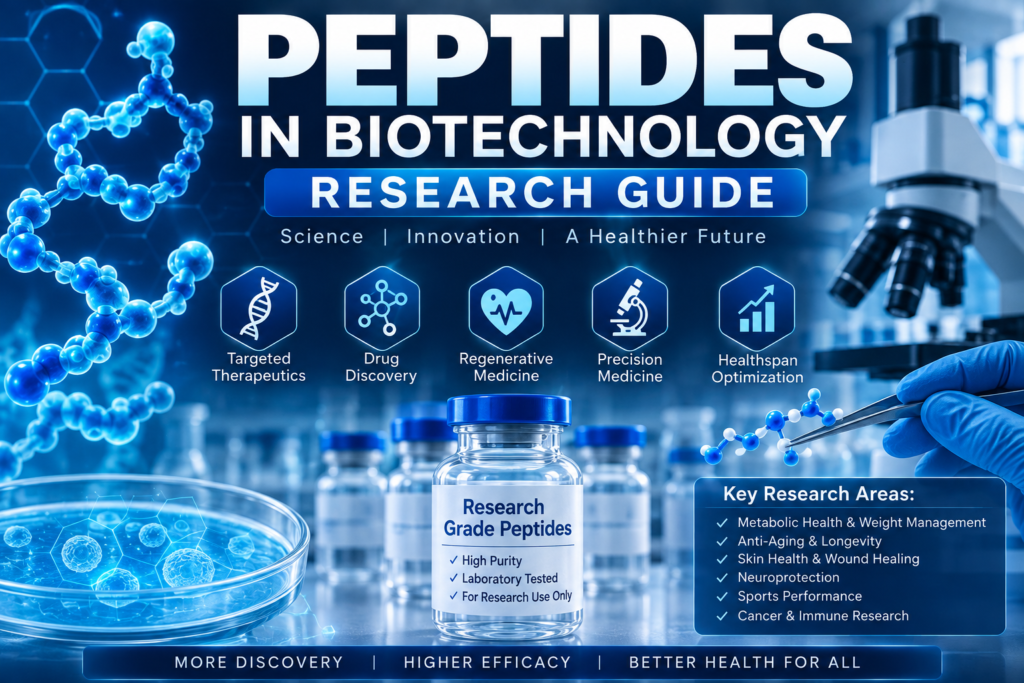
TogglePeptides in Biotechnology: How Researchers Study Cellular Signaling, Molecular Biology, and Advanced Research Peptides
Table of Contents
- Introduction
- What Are Peptides?
- Why Peptides Are Important in Biotechnology
- Understanding Cellular Signaling
- Molecular Biology and Peptide Research
- Protein Interactions and Cellular Communication
- Research Peptides in Modern Biotechnology
- Laboratory Applications
- Frequently Asked Questions
- Conclusion
Introduction
The field of peptides in biotechnology has grown rapidly over the last two decades, becoming one of the most exciting areas of molecular biology and laboratory science. Researchers around the world use research peptides to investigate how cells communicate, how proteins interact, and how biological systems regulate complex molecular processes.
Unlike large proteins, peptides are short chains of amino acids that are easier to study in controlled laboratory environments. Their relatively simple structures and highly specific biological interactions make them valuable tools for investigating cellular signaling, receptor biology, protein chemistry, and biotechnology innovation.
Today, biotechnology laboratories study numerous peptides, including GHK-Cu (Copper Tripeptide-1), BPC-157, TB-500, Retatrutide, Semaglutide, and Tirzepatide. Each research peptide contributes to a better understanding of biological systems through carefully designed experimental studies.
Peptides in biotechnology research…As biotechnology continues to evolve, peptide research is expected to remain an essential component of scientific discovery. Researchers continue exploring peptide chemistry, molecular communication, and protein interactions to improve knowledge of biological mechanisms and laboratory science.
This guide explores how peptides in biotechnology contribute to scientific research, explains the importance of cellular signaling, and examines why research peptides remain valuable tools for biotechnology laboratories worldwide.
Research Use Only: The peptides discussed throughout this article are intended exclusively for laboratory research and scientific investigation. They are not approved for human consumption, diagnosis, treatment, or prevention of disease.
What Are Peptides?
Peptides are short chains of amino acids connected by peptide bonds. While proteins often contain hundreds or thousands of amino acids, peptides usually contain far fewer, allowing researchers to investigate their molecular behavior with greater precision.
Because peptides naturally participate in many biological processes, they have become valuable research tools for understanding molecular communication within living systems.
Peptides in biotechnology research….Researchers investigate peptides to study:
- Cellular signaling pathways
- Protein interactions
- Receptor biology
- Molecular biology
- Biotechnology innovation
- Laboratory peptide chemistry
- Experimental biological systems
The growing importance of research peptides reflects the expanding role of peptide science in biotechnology and molecular research.
Why Peptides Are Important in Biotechnology
Modern biotechnology depends on understanding how biological systems function at the molecular level. Peptides provide researchers with highly specific tools for investigating these complex interactions.
Scientists study peptides in biotechnology because they allow laboratories to examine:
Cellular Communication
Cells constantly exchange information through chemical messengers. Peptides participate in many of these signaling pathways, making them valuable research molecules.
Molecular Signaling
Researchers investigate how peptides interact with receptors, proteins, and intracellular signaling pathways.
Protein Biology
Peptides help scientists understand how proteins communicate, fold, and interact with one another.
Experimental Laboratory Models
Controlled laboratory studies allow researchers to investigate peptide behavior while maintaining reproducible research conditions.
Understanding Cellular Signaling
Peptides in biotechnology research…One of the primary reasons scientists study research peptides is to better understand cellular signaling.
Cells rely on sophisticated communication networks to regulate biological activity. These signaling pathways involve proteins, peptides, enzymes, receptors, and numerous other molecules.
Researchers investigating peptides in biotechnology often examine:Peptides in biotechnology research
Signal Transmission
How biological information moves from one cell to another.
Receptor Activation
How peptides interact with cellular receptors during laboratory investigations.
Protein Communication
How proteins exchange molecular information inside cells.
Regulatory Networks
How signaling pathways contribute to complex biological systems.
Because peptides naturally participate in many of these processes, they remain essential research tools in molecular biology.
Molecular Biology and Peptide Science [Peptides in biotechnology research]
Molecular biology seeks to understand the interactions between DNA, RNA, proteins, and peptides.
Research peptides allow scientists to investigate:
Protein Structure
Proteins depend upon precise molecular structures. Researchers study peptide sequences to understand protein behavior.
Amino Acid Chemistry
Every peptide consists of amino acids arranged in a specific sequence. This sequence determines molecular characteristics that researchers investigate.
Cellular Responses
Scientists examine how cells respond to signaling molecules under carefully controlled laboratory conditions.
Biological Regulation
Researchers continue studying how peptides contribute to biological regulation and molecular communication.
Protein Interactions and Cellular Communication
Protein interactions represent one of the most important research areas within biotechnology.
Researchers investigate:
- Protein folding
- Protein binding
- Molecular recognition
- Peptide signaling
- Cellular communication
- Receptor biology
Because proteins rarely function independently, peptide research helps scientists understand broader biological systems rather than isolated molecular events.
Research Peptides in Modern Biotechnology
Several research peptides continue attracting scientific interest because they contribute to different areas of biotechnology research.
GHK-Cu (Copper Tripeptide-1)
GHK-Cu is widely investigated because of its copper-binding properties and importance within peptide chemistry and molecular biology research.
Scientists continue exploring GHK-Cu to better understand:
- Copper peptide interactions
- Molecular communication
- Cellular signaling
- Peptide chemistry
BPC-157
BPC-157 research focuses on peptide signaling, molecular communication, and experimental laboratory investigations.
TB-500
TB-500 research contributes to studies involving cellular organization, protein interactions, and molecular biology.
Together, these research peptides illustrate how different peptide compounds support modern biotechnology research.
Why Multi-Peptide Research Is Growing
Biological systems involve many interacting molecules rather than isolated compounds. As a result, researchers increasingly investigate combinations of peptides to better understand complex molecular behavior.
Combination studies may help scientists:
- Compare peptide characteristics
- Study complementary molecular pathways
- Investigate protein interactions
- Explore biological communication
- Expand peptide science knowledge
This growing interest reflects the evolution of peptides in biotechnology from studying individual molecules to investigating broader molecular networks.
Peptides in Biotechnology: How Researchers Study Cellular Signaling, Molecular Biology, and Advanced Research Peptides (Part 2)
Continue directly after Part 1.
Laboratory Quality Standards for Research Peptides
High-quality materials are the foundation of reliable scientific research. Whether laboratories are studying GHK-Cu, BPC-157, TB-500, or other research peptides, maintaining consistent quality standards helps improve reproducibility and confidence in experimental results.
Researchers commonly evaluate several important factors before beginning laboratory studies.
Peptide Purity
Purity is one of the most important characteristics of any research peptide. High-purity materials reduce the likelihood that impurities will influence laboratory observations. Analytical techniques such as High-Performance Liquid Chromatography (HPLC) are frequently used to assess purity.
Identity Verification
Researchers also verify that a peptide matches its intended molecular identity. Mass spectrometry is commonly used alongside HPLC to confirm molecular weight and composition.
Batch-to-Batch Consistency
Scientific studies often require consistent materials over time. Manufacturing processes designed to minimize variation help support reproducible experiments and meaningful comparisons between studies.
Proper Storage
Storage conditions can influence peptide stability. Laboratories typically follow manufacturer recommendations for storage, handling, and reconstitution to help preserve research materials for experimental use.
Biotechnology Applications of Research Peptides
The role of peptides in biotechnology continues to expand as new laboratory techniques become available. Researchers use peptides in many scientific fields to better understand biological systems.
Molecular Biology
Peptides are valuable tools for investigating how molecules interact within cells. Scientists examine signaling pathways, receptor activity, and protein communication to improve understanding of biological mechanisms.
Biotechnology Innovation
Biotechnology companies and academic laboratories use peptide research to explore new scientific questions, improve laboratory techniques, and develop innovative research models.
Peptide Chemistry
Understanding peptide structure, amino acid sequences, and molecular interactions contributes to advances in peptide chemistry and laboratory science.
Cosmetic Science Research
Copper peptides such as GHK-Cu (Copper Tripeptide-1) are also studied in cosmetic science research to better understand peptide behavior in laboratory models related to skin biology and extracellular matrix processes.
Comparing Popular Research Peptides
Although every peptide has unique characteristics, comparing their research focus helps illustrate the diversity of peptide science.
| Research Peptide | Primary Area of Laboratory Research | Scientific Focus |
|---|---|---|
| GHK-Cu (Copper Tripeptide-1) | Copper-binding peptide research | Molecular biology, peptide chemistry, biotechnology |
| BPC-157 | Peptide signaling research | Cellular communication, molecular pathways |
| TB-500 | Cellular organization research | Actin-related biology, molecular interactions |
| Retatrutide | Metabolic pathway research | Receptor biology and experimental peptide science |
| Semaglutide | Peptide receptor studies | Molecular signaling |
| Tirzepatide | Experimental receptor biology | Biotechnology research |
Each of these compounds contributes to the broader field of research peptides, providing scientists with valuable tools for laboratory investigation.
Why Multi-Peptide Research Is Expanding
Modern biology is highly interconnected. Cells communicate through complex signaling networks involving numerous proteins, peptides, enzymes, and receptors rather than isolated molecules.
Because of this complexity, researchers increasingly investigate combinations of peptides within controlled laboratory settings. Multi-peptide research allows scientists to:
- Compare molecular characteristics.
- Examine complementary signaling pathways.
- Investigate protein–peptide interactions.
- Explore biological communication networks.
- Generate new hypotheses for future laboratory research.
For example, formulations that combine GHK-Cu, BPC-157, and TB-500 allow researchers to examine multiple peptide classes within the same experimental framework. Products such as Alluvi Glow 70mg are intended for laboratory research involving these peptide combinations.
Future Trends in Peptides in Biotechnology
The future of peptides in biotechnology is expected to be shaped by advances in molecular biology, analytical chemistry, and biotechnology.
Areas of ongoing scientific interest include:
- Improved peptide synthesis techniques.
- Enhanced analytical testing methods.
- Better understanding of peptide–protein interactions.
- Computational modeling of peptide structures.
- Artificial intelligence in peptide design.
- Expanded molecular biology research.
- Advances in peptide manufacturing quality.
As these fields continue to evolve, research peptides will remain important tools for investigating biological systems and expanding scientific knowledge.
Frequently Asked Questions
What are peptides in biotechnology?
Peptides in biotechnology are short chains of amino acids used in laboratory research to study molecular biology, protein interactions, receptor activity, and cellular signaling.
Why are research peptides important?
Research peptides help scientists investigate biological mechanisms under controlled laboratory conditions and contribute to advances in biotechnology.
What is cellular signaling?
Cellular signaling is the process by which cells exchange information using signaling molecules such as peptides, proteins, hormones, and receptors.
What is molecular biology?
Molecular biology studies how DNA, RNA, proteins, and peptides interact within living systems.
What are protein interactions?
Protein interactions describe how proteins bind and communicate with other molecules to regulate biological processes.
What is GHK-Cu?
GHK-Cu, also known as Copper Tripeptide-1, is a naturally occurring copper-binding peptide widely studied in peptide science.
Peptides in biotechnology research..What is BPC-157?
BPC-157 is a synthetic research peptide investigated for its molecular characteristics in laboratory studies.
What is TB-500?
TB-500 is a synthetic peptide fragment associated with Thymosin Beta-4 research and studied in molecular biology.
Are research peptides approved medicines?
No. Research-grade peptides are intended exclusively for laboratory research and are not approved for human consumption or therapeutic use.
How do researchers verify peptide quality?
Researchers commonly use HPLC and mass spectrometry to evaluate peptide purity and identity.
Why is peptide purity important?
Higher purity supports more reliable laboratory investigations by reducing the influence of impurities on experimental results.
What industries use peptide research?
Research peptides are studied in biotechnology, molecular biology, analytical chemistry, cosmetic science, and academic research.
Why are multiple peptides studied together?
Combination research allows scientists to investigate complementary molecular pathways and interactions between different peptide classes.
What is Alluvi Glow 70mg?
Alluvi Glow 70mg is a research formulation containing GHK-Cu, BPC-157, and TB-500 for laboratory research purposes.
Where can I learn more?
Explore additional articles in the Research Peptides category, including guides on GHK-Cu Copper Peptide Research and BPC-157 and TB-500 Research.
Conclusion
The expanding role of peptides in biotechnology highlights their importance as research tools for investigating cellular signaling, molecular biology, and protein interactions. By studying compounds such as GHK-Cu, BPC-157, and TB-500, researchers continue to improve scientific understanding of biological communication and peptide chemistry.
Peptides in biotechnology research..As biotechnology advances, research peptides will remain central to laboratory investigations, helping scientists explore complex molecular systems while supporting future discoveries in peptide science.
