
Table of Contents
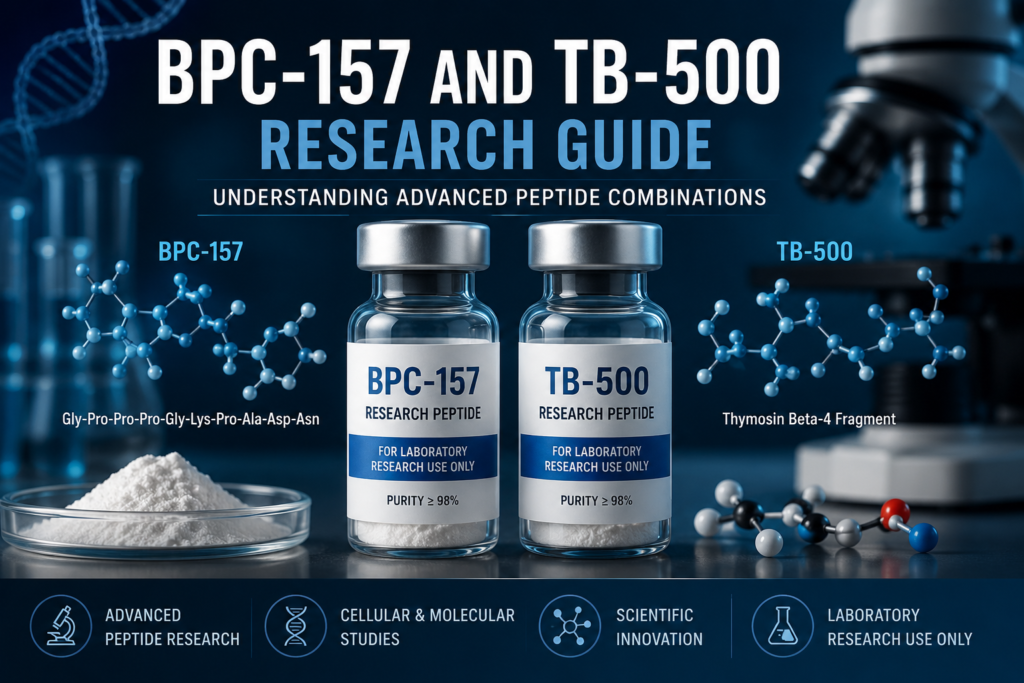
ToggleBPC-157 and TB-500 Research: The Complete Scientific Guide to Advanced Peptide Combination Studies
Table of Contents
- Introduction
- What Is BPC-157?
- What Is TB-500?
- Why BPC-157 and TB-500 Research Matters
- Peptide Science Explained
- Molecular Biology and Research Peptides
- Understanding Peptide Combination Research
- Frequently Asked Questions
- Conclusion
Introduction
BPC-157 and TB-500 research has become an increasingly discussed topic within peptide science, molecular biology, and biotechnology. Researchers continue to investigate research peptides to better understand how small chains of amino acids interact with biological systems, cellular communication pathways, and molecular mechanisms. As peptide technology advances, BPC-157 and TB-500 research provides valuable opportunities to explore peptide behavior in carefully controlled laboratory settings.
Interest in BPC-157 research peptide models and TB-500 research peptide studies has grown because both compounds are widely examined for their molecular characteristics and potential interactions with biological pathways. While each peptide has distinct properties, scientists are also interested in peptide combination research, where multiple peptides are evaluated together to better understand how different compounds interact in experimental models.
Modern biotechnology relies heavily on advanced research peptides to investigate complex biological questions. Peptides are used in laboratories worldwide to study protein interactions, cellular signaling, receptor activity, and molecular communication. By examining compounds such as BPC-157 and TB-500, researchers can expand scientific knowledge and contribute to a deeper understanding of peptide biology.
This guide provides a comprehensive overview of BPC-157 and TB-500 research, including the science behind these peptides, why they are studied together, and their importance within modern laboratory research.
Research Use Only: BPC-157 and TB-500 are supplied strictly for laboratory research purposes. They are not approved for human consumption, diagnosis, treatment, or prevention of disease.
What Are Research Peptides?
Research peptides are short chains of amino acids used by scientists to investigate biological processes under controlled laboratory conditions. Unlike medicines approved for clinical use, research peptides are intended solely for scientific investigation.
Researchers use peptides to explore:
- Cellular signaling pathways
- Molecular biology
- Protein interactions
- Biotechnology research
- Experimental laboratory models
- Peptide chemistry
The growing interest in research peptides has led to significant advances in biotechnology and molecular science. These compounds allow researchers to investigate how biological systems communicate, respond to external signals, and regulate complex cellular functions.
What Is BPC-157?
BPC-157 is a synthetic peptide that has become one of the most widely discussed compounds in research peptide literature. The name BPC refers to Body Protection Compound, reflecting its association with protective proteins identified in gastric environments.
The BPC-157 research peptide is investigated in laboratory settings to understand peptide signaling, molecular interactions, and cellular communication. Researchers are interested in its structure and how it behaves within experimental models.
Areas commonly explored include:
- Peptide signaling pathways
- Cellular communication
- Molecular biology
- Protein interactions
- Experimental laboratory research
Because of its unique amino acid sequence, BPC-157 research continues to attract attention from scientists studying peptide biology and biotechnology.
Molecular Characteristics of BPC-157
From a research perspective, BPC-157 is examined to better understand peptide structure and molecular behavior.
Scientists investigate:
Cellular Communication
Cells communicate using complex networks of signaling molecules. Peptides may influence these pathways, making them valuable research tools.
Molecular Signaling
Researchers examine how peptide compounds interact with receptors and signaling pathways involved in biological communication.
Protein Interactions
Laboratory studies explore how peptides interact with proteins and contribute to molecular processes.
Experimental Models
Controlled research environments allow scientists to investigate peptide behavior while maintaining strict laboratory standards.
What Is TB-500?
TB-500 is a synthetic peptide fragment associated with Thymosin Beta-4, a naturally occurring peptide found throughout the body. In laboratory research, TB-500 research peptide studies focus on understanding molecular biology, cellular organization, and peptide interactions.
Researchers investigate TB-500 because of its relationship with:
- Cellular organization
- Actin dynamics
- Protein interactions
- Molecular communication
- Experimental biology
Like other advanced research peptides, TB-500 is intended exclusively for scientific investigation.
The Science Behind TB-500 Research
The TB-500 research peptide has become an important subject within peptide science because of its unique molecular characteristics.
Research areas commonly include:
Actin Research
Actin is a structural protein involved in cell shape and movement. Researchers study how peptides relate to actin-associated biological processes.
Cellular Organization
Scientists investigate how peptide compounds influence cellular architecture and communication.
Molecular Biology
TB-500 contributes to research involving protein interactions, peptide chemistry, and biological signaling.
Why BPC-157 and TB-500 Research Matters
The field of BPC-157 and TB-500 research continues to grow because researchers increasingly recognize the importance of studying peptide combinations rather than isolated compounds.
Combination studies allow scientists to:
- Compare peptide characteristics
- Investigate multiple molecular pathways
- Study biological interactions
- Explore peptide communication
- Expand knowledge of peptide science
Rather than focusing on a single mechanism, peptide combination research provides a broader understanding of how different research peptides behave under laboratory conditions.
Understanding Peptide Combination Research
One of the most exciting developments in modern biotechnology is the study of multiple peptides together. Scientists refer to this approach as peptide combination research.
Research may investigate:
- Individual peptide characteristics
- Combined molecular behavior
- Cellular communication
- Biological pathways
- Protein interactions
By examining combinations such as BPC-157 and TB-500, researchers gain valuable insights into peptide science and molecular biology.
BPC-157, TB-500, and Alluvi Glow 70mg
For laboratories interested in studying multiple peptide compounds within a single formulation, Alluvi Glow 70mg combines:
- GHK-Cu (Copper Tripeptide-1)
- BPC-157
- TB-500
This multi-peptide formulation supports research into peptide interactions, cellular signaling, molecular biology, and biotechnology applications. Researchers studying BPC-157 and TB-500 research often explore how these peptides complement broader peptide research models alongside compounds such as GHK-Cu.
BPC-157 and TB-500 Research: The Complete Scientific Guide to Advanced Peptide Combination Studies (Part 2)
Comparing BPC-157 and TB-500 Research
Although BPC-157 and TB-500 research are frequently discussed together, each peptide has distinct characteristics that make it valuable in laboratory investigations. Researchers often examine each compound independently before exploring peptide combination research to better understand how different peptides behave within controlled experimental environments.
| Feature | BPC-157 Research Peptide | TB-500 Research Peptide |
|---|---|---|
| Classification | Synthetic research peptide | Synthetic peptide fragment related to Thymosin Beta-4 |
| Main Research Areas | Cellular signaling, molecular biology, peptide interactions | Cell organization, actin-related biology, molecular mechanisms |
| Research Environment | Laboratory studies | Laboratory studies |
| Scientific Focus | Peptide communication and molecular pathways | Cellular structure and biological organization |
This comparison highlights why BPC-157 and TB-500 research continues to receive attention within biotechnology and peptide science. Each peptide contributes different perspectives for laboratory investigations.
Laboratory Applications of BPC-157 and TB-500 Research
Modern peptide laboratories investigate BPC-157 and TB-500 research across a variety of scientific disciplines. While research goals vary, common areas of investigation include:
Molecular Biology Research
Scientists use research peptides to explore molecular interactions between proteins, receptors, and signaling molecules. BPC-157 research peptide models and TB-500 research peptide studies contribute to understanding peptide chemistry and biological communication.
Cellular Signaling Studies
Cellular signaling is one of the most important areas of peptide science. Researchers investigate how signaling molecules transmit information between cells and how peptides participate in these processes.
Protein Interaction Research
Proteins rarely function in isolation. Advanced research peptides provide opportunities to study protein networks and molecular communication within experimental systems.
Biotechnology Research
Peptides remain valuable tools in biotechnology because they help researchers investigate biological mechanisms, peptide chemistry, and molecular pathways that may contribute to future scientific discoveries.
BPC-157 and TB-500 Research in Peptide Science
The rapid growth of BPC-157 and TB-500 research reflects the increasing importance of peptide science. Laboratories continue exploring how peptides influence biological communication while expanding knowledge of molecular biology.
Research frequently focuses on:
- Peptide structure
- Amino acid sequences
- Cellular communication
- Molecular interactions
- Protein regulation
- Biological signaling
- Experimental laboratory models
By investigating these areas, scientists continue advancing the field of research peptides.
The Importance of High-Quality Research Peptides
Reliable research begins with high-quality laboratory materials. When selecting research peptides, laboratories often consider factors such as:
Purity
High-purity research materials help improve consistency and reliability in laboratory studies.
Identity Testing
Analytical techniques such as HPLC (High-Performance Liquid Chromatography) and mass spectrometry are commonly used to confirm peptide identity and composition.
Batch Consistency
Consistent manufacturing processes support reproducible scientific investigations and help maintain confidence in research outcomes.
BPC-157 and TB-500 Research Within Multi-Peptide Formulations
Many laboratories investigate peptide combinations because biological systems rarely involve only one signaling molecule. Peptide combination research allows scientists to evaluate interactions between different peptide compounds.
One example is Alluvi Glow 70mg, a multi-peptide research formulation that includes:
- GHK-Cu (Copper Tripeptide-1)
- BPC-157
- TB-500
Researchers interested in BPC-157 and TB-500 research may also investigate how these peptides relate to broader peptide research models involving copper peptides and other laboratory compounds.
Frequently Asked Questions
What is BPC-157?
BPC-157 is a synthetic research peptide studied in laboratory settings to investigate peptide biology, molecular communication, and cellular signaling.
What is TB-500?
TB-500 is a synthetic peptide fragment associated with Thymosin Beta-4 research and is studied in laboratory environments for its molecular characteristics.
Why are BPC-157 and TB-500 researched together?
Researchers investigate BPC-157 and TB-500 research together because combination studies may provide broader insights into peptide interactions and molecular pathways than studying individual compounds alone.
Are BPC-157 and TB-500 medicines?
No. Research peptides are supplied strictly for laboratory research purposes and are not approved for human consumption or medical treatment.
What are research peptides?
Research peptides are laboratory compounds used by scientists to investigate biological processes, protein interactions, and molecular biology.
What is peptide combination research?
Peptide combination research examines how multiple peptide compounds behave together in controlled laboratory studies.
Why is peptide science important?
Peptide science helps researchers understand biological communication, protein interactions, and cellular mechanisms that contribute to advances in biotechnology and molecular biology.
How are research peptides analyzed?
Research laboratories commonly use analytical methods such as HPLC and mass spectrometry to evaluate peptide identity and purity.
What is Alluvi Glow 70mg?
Alluvi Glow 70mg is a multi-peptide research formulation containing GHK-Cu, BPC-157, and TB-500 for laboratory research applications.
Can BPC-157 and TB-500 be used outside laboratory research?
These compounds are intended for laboratory research only. They are not approved for human consumption or therapeutic use.
Conclusion
BPC-157 and TB-500 research continues to play an important role in peptide science, biotechnology, and molecular biology. By investigating these research peptides individually and in combination, scientists expand knowledge of cellular signaling, molecular interactions, and peptide chemistry.
As interest in advanced research peptides continues to grow, studies involving BPC-157 research peptide models, TB-500 research peptide investigations, and peptide combination research contribute to a deeper understanding of biological systems and laboratory science.
Researchers exploring comprehensive peptide formulations may also be interested in Alluvi Glow 70mg, which combines GHK-Cu, BPC-157, and TB-500 within a single research formulation designed for laboratory investigation.
